 EN
EN


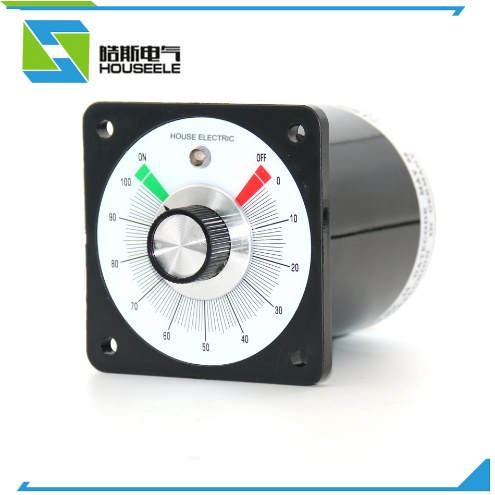
What Is a Percentage Timer and How Does It Transform Irrigation Logic?
From Fixed Minutes to Proportional Control: The Core Shift in Scheduling Philosophy
Old school irrigation systems typically stick to set schedules like 15 minutes every day no matter what's going on outside. The problem? They waste tons of water when it's already damp and rainy, but then leave crops parched during those brutal heat waves we've been seeing lately. Smart percentage timers fix this whole mess by adjusting watering times proportionally. Instead of sticking rigidly to one number, these timers increase or decrease watering based on actual conditions in the field. Take spring for instance most folks cut back to around 60% of normal while summer months might need double the usual amount. What makes this work so well is how closely matched it gets to what plants actually need at any given moment. Farmers can finally stop guessing and start responding properly to changing seasons, different soils across their land, and even those tricky microclimates that develop between rows of crops.
How Percentage Timers Translate Crop Water Demand into Adjustable Runtime Signals
These devices convert dynamic crop water requirements into actionable runtime signals using mathematical scaling tied to evapotranspiration (ET), rainfall, and soil moisture data. If a baseline runtime is set at 20 minutes (100%), the system adjusts proportionally:
- A 30% ET increase triggers a 130% signal (26 minutes)
- A 20% rainfall event reduces output to 80% (16 minutes)
Integrated algorithms process inputs from local weather stations, ET controllers, or onboard sensors to generate these adjustments automatically. Crucially, this proportional response preserves irrigation efficiency across soil textures—preventing overwatering in low-permeability clay soils and avoiding underwatering in fast-draining sands—without requiring manual recalibration.
Integrating Percentage Timers with Smart Irrigation Systems
Seamless API Integration with ET Controllers and Soil Moisture Sensors
Smart percentage timers work right out of the box with modern irrigation systems through standard API connections, allowing them to talk in real time with both evapotranspiration controllers and soil moisture sensors. The ET controller acts like a weather watcher, sending signals to adjust watering times when it senses higher air demand from plants. Meanwhile, those little soil probes do their own thing too stopping all irrigation completely during rainfall or whenever the ground gets too wet. What this means is no more fixed schedules stuck on outdated timers. Instead we get something that adapts hour by hour keeping roots happy without needing constant human oversight. According to recent field tests published last year, these connected systems cut down wasted water by about 18 percent over regular old mechanical timers.
Retrofitting Legacy Controllers: A Practical 4-Step Implementation Guide
Upgrading existing irrigation systems with percentage timer technology is straightforward and cost-effective. Follow this validated four-step process:
- Compatibility Check: Confirm controller voltage (typically 24V AC) and terminal configuration for auxiliary module installation
- Hardware Installation: Mount the timer module adjacent to the controller in a waterproof enclosure, connecting power and valve wires per manufacturer specifications
- Configuration Protocol: Input crop-specific coefficients and local ET data through intuitive mobile apps or web dashboards
- Validation Testing: Conduct calibration cycles while cross-referencing in-situ soil moisture readings to fine-tune percentage outputs
This retrofit preserves legacy infrastructure investments while delivering modern precision. Groundwater conservation districts report 63% adoption among farmers who implemented this method—demonstrating its practicality and scalability.
Measurable Efficiency Gains and Contextual Limitations of Percentage Timers
Field Evidence: 27% Reduction in Overwatering and 18% Average Water Savings
In a recent study from 2023 looking at 42 different commercial farms, researchers discovered something interesting about irrigation methods. When farmers switched from fixed time settings to percentage based scheduling, they saw overwatering drop by around 27%. For things like almond orchards, vineyards, and even golf course grass, this method cut water usage down by about 18% on average while still getting the same harvest quality. What makes this system work so well is how it adjusts itself when weather changes. If it gets cool or starts raining, the system knows to back off watering automatically, keeping soil moisture right where it needs to be without anyone having to mess with controls manually. And what's really promising? These improvements weren't just seen in lab tests but actually worked across all sorts of farm operations in the field.
Critical Boundary Condition: Why Clay Soils May Trigger 12% Overestimation Risk
Percentage timers work pretty well in many situations but run into trouble with heavy clay soils. The problem comes down to how slowly water moves through these soils. Moisture stays around longer than what the ET calculations predict, so the timer ends up watering again before the previous dose has actually soaked in. A study published last year by the Soil Science Society showed that without some kind of extra monitoring, there's about a 12 percent chance of overwatering happening in these clay conditions. Farmers dealing with this issue need to install actual soil moisture sensors that can step in and adjust or stop the timer signals when the soil just isn't absorbing water fast enough. What we're seeing here is why smart systems still need human oversight. No matter how advanced the technology gets, it needs real world data to function properly in different field conditions.
FAQ
What is a percentage timer?
A percentage timer is a smart irrigation device that adjusts watering times proportionally based on real-time field conditions such as evapotranspiration, rainfall, and soil moisture levels.
How do percentage timers benefit irrigation?
Percentage timers optimize water usage by preventing overwatering and underwatering, adapting to conditions like weather changes or soil types, leading to significant water savings and improved crop health.
Are percentage timers compatible with existing irrigation systems?
Yes, percentage timers integrate easily with modern irrigation systems via API connections and can be retrofitted to existing systems with a practical four-step process.
What are the limitations of percentage timers?
Percentage timers may face challenges with heavy clay soils, where slower water movement poses a risk of overwatering. Additional soil moisture sensors may be required for precise adjustments in those conditions.