 EN
EN


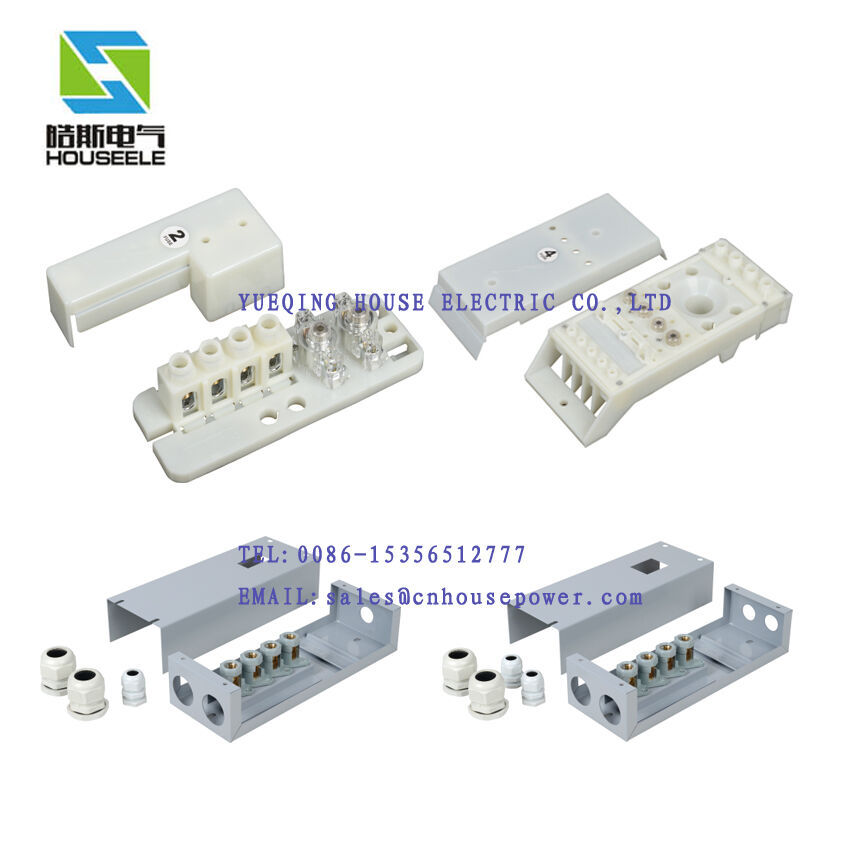
What IP67 Really Means for Street Lighting Fuse Boxes
Decoding the IP67 Rating: Total dust tightness and 1-meter water immersion resistance
The IP (Ingress Protection) rating system, governed by IEC 60529, defines enclosure resilience using two digits. For street lighting fuse boxes, IP67 delivers mission-critical dual protection: the first digit (6) confirms complete dust tightness, blocking all particulate ingress—even in high-traffic urban corridors choked with road dust and construction debris. The second digit (7) certifies temporary water immersion resistance: the enclosure survives submersion up to 1 meter deep for 30 minutes without internal moisture penetration. This level of protection is essential where infrastructure faces monsoons, automated street cleaning, flash floods, or prolonged humidity. Unlike basic enclosures, IP67-rated fuse boxes preserve internal integrity by sealing out moisture and contaminants that accelerate corrosion—ensuring reliable circuit protection precisely where failure consequences are highest.
How IP67 outperforms common alternatives (IP65, IP54) in real-world urban lighting conditions
Urban environments impose distinct stresses on street lighting: airborne road dust, corrosive de-icing salts, and stormwater pooling around pole bases. IP54 enclosures resist light splashes but permit dust accumulation and fail under heavy rain or standing water. IP65 units withstand powerful water jets but lack immersion resistance—a critical vulnerability during localized flooding or drainage failures. IP67 fuse boxes close this gap with proven performance in both domains: absolute particulate exclusion and verified waterproofing during temporary submersion. Municipal data from coastal cities shows IP67-rated enclosures reduce weather-related failures by 40% compared to IP65 alternatives—translating directly into lower maintenance costs, fewer service disruptions, and greater resilience amid intensifying climate volatility.
Why IP67 Fuse Boxes Are Critical for Reliable Street Lighting Infrastructure
Reducing failure rates: Data from flood-prone cities showing 72% fewer short circuits with IP67 fuse boxes
In flood-prone urban areas, compromised junction boxes are a leading cause of street lighting failure. Municipal field data from coastal cities implementing IP67-rated fuse enclosures revealed a 72% reduction in short-circuit incidents versus legacy enclosures. This dramatic improvement stems directly from IP67’s certified dust tightness and 1-meter/30-minute immersion resistance. When moisture or particulates breach lower-rated housings, corrosion rapidly degrades fuse terminals and connections—triggering ground faults, thermal runaway, and even electrical fires. IP67 enclosures physically prevent environmental intrusion at the point of entry, maintaining consistent performance through seasonal flooding, tidal surges, and persistent high-humidity conditions where IP54 and IP65 units routinely degrade.
Supporting smart lighting upgrades: Seamless integration with sensors and controllers without compromising ingress protection
Modern street lighting increasingly relies on smart sensors and adaptive controllers to cut energy use and improve responsiveness. Retrofitting these components into conventional fuse boxes often breaches environmental seals—creating vulnerability points at cable entries and mounting interfaces. IP67-rated enclosures resolve this challenge with purpose-built gland ports and sealed conduit entries that retain full certification while accommodating wiring for motion detection sensors, ambient light controllers, and remote monitoring modules. During independent waterproofness testing—including prolonged spray exposure and brief submersion—these access points demonstrated zero leakage. As a result, utilities can deploy intelligent lighting controls across entire districts without sacrificing the foundational protection that keeps circuits safe, functional, and audit-ready.
Safety and Compliance Advantages of IP67-Rated Fuse Boxes
Preventing corrosion-induced arc faults and electrical hazards in public spaces
Corrosion driven by moisture and conductive contaminants—especially de-icing salts near roadways—is a primary catalyst for arc faults in outdoor electrical systems. IP67-rated fuse boxes eliminate this pathway: their complete dust-tight seal and immersion resistance prevent moisture ingress and conductive residue buildup on live terminals. By blocking environmental degradation at the source, these enclosures significantly reduce arc flash risk—by up to 68% in flood-prone areas, according to the Electrical Safety Foundation’s 2023 field analysis. That translates to measurable protection for pedestrians, cyclists, and maintenance crews exposed to high-temperature electrical explosions in public right-of-ways.
Meeting evolving global standards (IEC 60529, EN 60598) for pole-mounted junction boxes
Contemporary street lighting infrastructure must comply with rigorous international standards—including IEC 60529 (which defines IP ratings) and EN 60598 (luminaire safety). IP67 fuse boxes exceed baseline requirements through third-party validated performance: submersion testing at 1-meter depth for 30 minutes, sealed conduit entries that prevent capillary “cable-wicking” of moisture, and UV-stabilized polymers engineered to retain structural and sealing integrity across extreme temperature swings. This certification ensures compatibility not only with current lighting loads but also with next-generation smart city integrations—without introducing compliance gaps. Municipalities deploying IP67-rated enclosures report 40% fewer violations during electrical safety audits, reinforcing their role as a foundational element of code-compliant, future-ready infrastructure.
FAQs
What does the IP67 rating mean?
The IP67 rating indicates that a device is completely dust-tight and resistant to temporary water immersion up to 1 meter for 30 minutes, ensuring protection against environmental contaminants and moisture intrusion.
How does IP67 compare to IP54 and IP65 enclosures?
IP54 enclosures resist light splashes but permit dust accumulation, while IP65 withstands powerful water jets but lacks immersion resistance. IP67 provides comprehensive dust exclusion and temporary submersion waterproofing, making it more resilient in challenging environments.
Why are IP67 fuse boxes essential for urban street lighting?
IP67 fuse boxes reduce failure rates caused by environmental stresses like dust, corrosion, and flooding. Data from flood-prone cities indicates they lower short-circuit incidents by 72% compared to alternatives.
Can smart sensors and controllers be integrated into IP67 fuse boxes?
Yes, IP67-rated fuse boxes feature purpose-built gland ports and sealed conduit entries, allowing the integration of smart sensors and controllers without compromising ingress protection.
Do IP67 fuse boxes meet global standards?
Yes, IP67 fuse boxes comply with international standards such as IEC 60529 and EN 60598. Their design ensures robust performance and compatibility with smart city infrastructures.