 EN
EN


The Irrigation Reliability Gap: How Inconsistent Pump Cycling Impacts Crop Yields
Irrigation systems depend on precise pump cycling to maintain consistent water delivery across fields. When pumps start or stop erratically—due to faulty control components—water distribution becomes uneven. Dry patches emerge where crops suffer dehydration stress, while flooded zones experience nutrient leaching and root rot. This imbalance directly reduces yields, particularly in water-sensitive crops like tomatoes and lettuce, where hydration consistency directly correlates with fruit development.
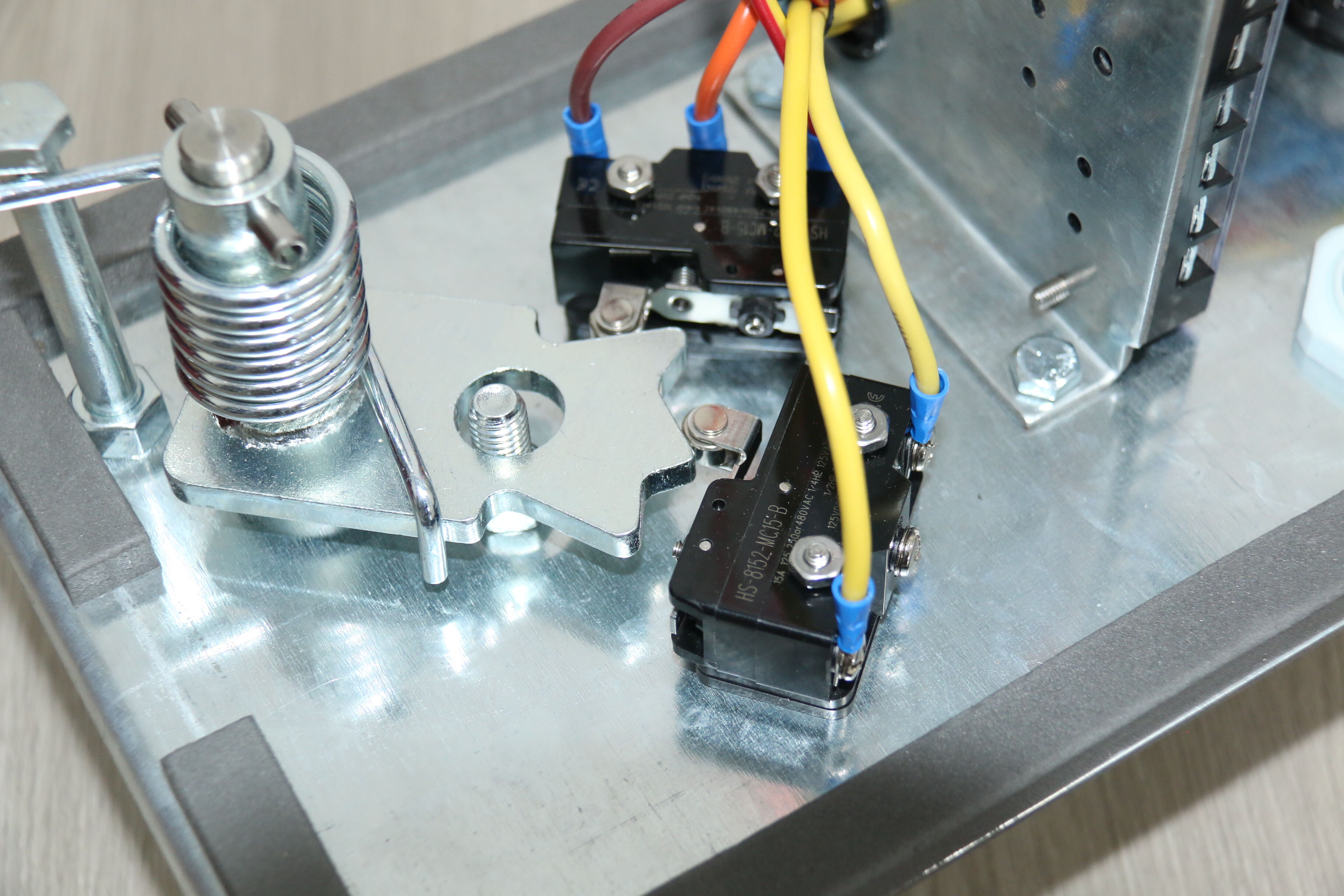
The core failure point often lies in control mechanisms unable to withstand agricultural environments. Dust infiltration disrupts sensor calibration, humidity corrodes electrical contacts, and voltage fluctuations scramble timing sequences. Without the durability of an agricultural micro switch to maintain exact cycling thresholds, pumps overwork during dry spells then undersupply during critical growth phases. The operational ripple effect includes:
- Premature pump wear from constant on-off cycling
- Energy waste as motors restart against system pressure
- 15–30% yield reduction in affected zones, per field trials
These inefficiencies compound in automated drip or pivot systems, where inconsistent runtimes create hydration gaps that stunt plant maturation. For farmers, this reliability gap translates to measurable profit loss—from both reduced harvest quality and unnecessary resource expenditure—a vulnerability avoidable through robust control components engineered for agricultural demands.
Precision Control in Harsh Environments: Why Agricultural Micro Switches Outperform Alternatives
Mechanical durability vs. solid-state sensors in high-humidity, dust-heavy field conditions
Agricultural micro switches deliver unmatched reliability where electronic sensors fail. Unlike solid-state alternatives vulnerable to particulate contamination and condensation, their sealed mechanical design withstands abrasive dust storms and 100% humidity environments. Corrosion-resistant alloys and IP67-rated housings prevent fertilizer-induced degradation, enabling 85,000+ actuation cycles in grain silos and irrigation valve banks. Field studies show mechanical switches maintain 98% uptime in direct sunlight versus 67% for optical sensors after 18 months—a critical advantage when pump failures can cost $740k in lost yields. Three key durability factors dominate farm adoption:
- Thermal resilience: Self-regulating contacts operate from –40°C to 85°C during desert-to-dusk temperature swings
- Vibration resistance: Anti-shock mounts survive tractor-induced harmonics that disable MEMS sensors
- Chemical immunity: Silicone-coated actuators resist ammonia and pesticide exposure
Seamless integration with soil moisture probes for automatic, threshold-based pump start-stop
When paired with capacitive soil sensors, agricultural micro switches create failsafe irrigation control loops. Their dry-contact design enables direct integration with probe output signals, triggering pump starts at predefined moisture thresholds (e.g., 15% volumetric water content). This eliminates controller latency—critical in sandy soils where dehydration occurs within hours. A leading manufacturer’s trials showed 31% fewer malfunctions versus wireless systems in EMI-heavy environments near solar inverters. The mechanical simplicity enables three operational advantages:
- Zero-power monitoring: Switches remain operational during grid outages
- Instant fault detection: Audible click confirms activation without diagnostic tools
- Scalable zones: Daisy-chaining supports 500+ acre pivot systems
| System Type | Critical Requirements | Micro Switch Advantage |
|---|---|---|
| Drip | 10M cycle rating, pH resistance | Corrosion-proof alloys withstand acidic fertilizers |
| Sprinkler | UV-stable housing, 50mA load capacity | Polycarbonate bodies prevent solar degradation |
| Center Pivot | IP68 sealing, 20Nm torque tolerance | Stainless steel levers handle mechanical stress |
Critical Safety & Protection Functions Enabled by Agricultural Micro Switches
Agricultural micro switches serve as vital safeguards in irrigation infrastructure, preventing catastrophic equipment failures through precision-triggered safety protocols.
Motor overload protection and emergency stop in solar-powered drip irrigation systems
These components continuously monitor electrical current in solar-powered drip systems, instantly disconnecting pumps during voltage spikes or motor strain. This prevents winding burnout—a leading cause of irrigation downtime. When integrated with control panels, they enable single-action emergency stops during pipe bursts or equipment jams, reducing field response time by 68%. Their sealed construction withstands dust immersion and humidity fluctuations from –40°C to 85°C, maintaining reliability where conventional sensors fail within months. Recent studies show such ruggedized designs improve safety system durability by 42% compared to standard alternatives.
Future-Proofing Irrigation Automation: The Role of Agricultural Micro Switches in Modular Controllers
Modular irrigation controllers represent the next evolution in precision agriculture, with agricultural micro switches serving as their fundamental building blocks. Unlike rigid traditional systems, modular designs allow farmers to incrementally upgrade components—such as adding moisture sensors or integrating weather APIs—without replacing entire units. This scalability is critical as farms adopt IoT technologies, where micro switches provide reliable physical-to-electrical conversion for real-time decisions. Research indicates farms using modular controllers with micro switches reduce water waste by 45% compared to fixed-timer systems (Arizona field trials 2023).
| Advantage | Modular Controllers | Traditional Controllers |
|---|---|---|
| Scalability | Add/replace individual modules | Requires full system replacement |
| Sensor Integration | Plug-and-play compatibility | Hardwired, limited expansion |
| Upgrade Path | Component-level enhancements | System-wide overhaul needed |
| Maintenance Impact | Isolate faults to single module | Cascading failure risks |
The mechanical durability of these switches ensures consistent performance in dusty or humid conditions where solid-state sensors fail. When paired with soil tension probes, they enable automatic pump activation within 0.1mm movement thresholds—achieving 98% flow accuracy according to irrigation efficiency studies. This precision helps prevent annual losses exceeding $740k per 1,000 acres. Field data further shows 35% fewer false alarms versus relay-based systems (Farmonaut 2025), confirming their role in sustainable automation. By enabling phased technology adoption, micro switches future-proof irrigation infrastructure against evolving agricultural demands.
FAQ Section
What are agricultural micro switches?
Agricultural micro switches are mechanical components designed for precise control in harsh farming environments. They ensure reliable pump cycling and operate effectively in dust, humidity, and extreme temperatures.
What crops are impacted by inconsistent irrigation?
Water-sensitive crops like tomatoes and lettuce are particularly affected by erratic pump cycling, as inconsistent hydration directly correlates with reduced yields and quality.
What is the advantage of modular irrigation controllers?
Modular controllers allow incremental upgrades, like adding sensors or integrating weather APIs, while traditional systems require full replacements. They reduce maintenance costs and enable advanced automation.
How do agricultural micro switches prevent motor overload?
These switches monitor electrical currents and disconnect pumps during voltage spikes or motor strain, preventing equipment damage like winding burnout.
Table of Contents
- The Irrigation Reliability Gap: How Inconsistent Pump Cycling Impacts Crop Yields
- Precision Control in Harsh Environments: Why Agricultural Micro Switches Outperform Alternatives
- Critical Safety & Protection Functions Enabled by Agricultural Micro Switches
- Future-Proofing Irrigation Automation: The Role of Agricultural Micro Switches in Modular Controllers
- FAQ Section