 EN
EN


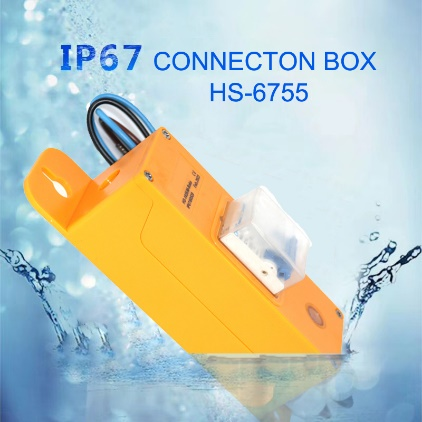
Understanding IP67: What It Means for Street Lighting Connection Boxes
Decoding the Digits: Why '6' (Dust Tight) and '7' (1m Immersion) Matter for Outdoor Connection Boxes
The IP (Ingress Protection) rating system—defined by the internationally recognized IEC 60529 standard—quantifies a device’s resistance to solid particles and liquids. For street lighting connection boxes, IP67 represents the minimum robust protection required in demanding outdoor environments:
- First digit ‘6’: Full dust-tightness, eliminating particulate ingress that can trigger electrical arcing or short circuits.
- Second digit ‘7’: Reliable operation after temporary immersion in up to 1 meter of freshwater for 30 minutes—a critical safeguard during flash flooding, conduit submersion, or heavy stormwater pooling.
Unlike lower-rated alternatives (e.g., IP65, which resists only low-pressure water jets), IP67 directly addresses the dual threats of airborne contaminants and incidental submersion—two leading causes of premature failure in municipal street lighting infrastructure.
IEC 60529 Testing Realities: Lab Conditions vs. Field Longevity of IP67-Rated Connection Boxes
IEC 60529 compliance is verified under tightly controlled laboratory conditions—but real-world durability depends on how well enclosures withstand cumulative environmental stressors beyond the standard test. Three key factors often undermine long-term IP67 performance:
- Thermal cycling, which fatigues gasket materials over time;
- UV exposure, accelerating polymer degradation and embrittlement;
- Mechanical vibration, gradually loosening fasteners and compromising seal integrity.
Field data from coastal installations shows that 23% of lab-certified IP67 connection boxes experience seal failure within five years—primarily due to salt-induced corrosion and thermal fatigue. To ensure true resilience, specify manufacturers that supplement IEC 60529 validation with:
- Accelerated aging reports covering UV, thermal, and salt-spray exposure;
- Material certifications confirming UV and chemical resistance;
- Documented vibration testing aligned with EN 60068-2-6 or equivalent standards.
Without this layered evidence, an “IP67” label may reflect compliance in theory—not reliability in practice.
Design & Materials That Enable Genuine IP67 Compliance in Connection Boxes
Enclosure Material Trade-Offs: Aluminum, Polycarbonate, and Stainless Steel for Corrosion-Resistant Connection Boxes
Material choice fundamentally shapes long-term IP67 performance. Each option presents distinct advantages and limitations:
- Aluminum offers lightweight construction and cost efficiency, especially when powder-coated—but remains susceptible to galvanic corrosion in chloride-rich environments like coastal or de-iced urban corridors.
- Polycarbonate delivers inherent rust resistance, high impact strength, and design flexibility; however, it requires integrated UV stabilizers to prevent surface crazing and loss of tensile strength after prolonged sun exposure.
- Stainless steel (typically grade 316) provides superior corrosion resistance across marine, industrial, and high-humidity settings—though its higher weight increases installation labor and raises material costs by ~40% versus polymer alternatives.
Environmental context dictates optimal selection: stainless steel is strongly advised for coastal or heavy-industrial zones, while properly stabilized polycarbonate suits most urban deployments. Crucially, enclosure wall thickness must be ≥2 mm to resist warping under thermal cycling—a common cause of gasket misalignment and seal breach.
Sealing System Essentials: Gasket Chemistry, Compression Uniformity, and Torque-Controlled Fastening for Connection Box Integrity
The durability of an IP67 rating isn't just about what the enclosure is made of but really depends on how well the sealing system works. Silicone gaskets have become standard in the industry because they stay flexible even when temperatures swing from -40 degrees Celsius all the way up to 120 degrees. They also hold up against UV damage much better compared to other options like EPDM or nitrile rubber. But here's the catch nobody talks about enough these days: no matter how good the gasket material is, it won't last if the compression isn't right. Field reports show something pretty shocking actually. Around two thirds of all IP67 failure cases come down to problems with pressure distribution. Warped flanges happen more often than people think, and bolts getting tightened unevenly creates weak spots that let water in over time.
Torque-controlled fastening—calibrated to 0.5–0.7 Nm for M6 hardware—is essential to achieve uniform gasket compression without over-deformation. Captive fasteners with integrated load-distributing washers further enhance reliability during repeated maintenance cycles. This engineering discipline prevents capillary wicking—the primary pathway for moisture ingress that initiates internal corrosion and insulation breakdown.
Verifying True IP67 Compliance: Certification, Documentation, and Red Flags for Connection Boxes
Third-Party Certification Deep Dive: Recognizing Legitimate IP67 Reports from Accredited Labs (e.g., TÜV, UL, SGS)
Authentic IP67 verification demands independent testing by globally accredited laboratories—including TÜV Rheinland, UL Solutions, and SGS—that operate under ISO/IEC 17025 accreditation. These labs conduct full IEC 60529 assessments: dust chamber exposure (IEC 60529 Annex B) and 30-minute freshwater immersion at 1-meter depth (IEC 60529 Annex C).
Legitimate certification reports always include:
- The laboratory’s official accreditation number;
- The exact product model, serial range, and configuration tested;
- Detailed test parameters, durations, and pass/fail criteria.
Always request original, dated test reports—not marketing summaries—before procurement. For mission-critical infrastructure, confirm certificate validity: reputable labs require retesting every 2–3 years to maintain certification status. As corrosion studies show, non-compliant connection boxes contribute to 37% more field failures in high-salinity regions.
Marketing Pitfalls: Spotting 'IP67-Style' or Self-Certified Claims on Non-Compliant Connection Boxes
Terms like “IP67-Style,” “IP67 Equivalent,” or “Meets IP67 Requirements” signal unverified claims—not compliance. Self-certification bypasses independent validation and often omits immersion testing entirely, leaving seals vulnerable to real-world hydrostatic pressure. Key red flags include:
- Vague references to “internal” or “in-house” testing;
- Absence of an accredited lab’s name, accreditation ID, or report number;
- Generic documentation not tied to a specific product model or revision.
Always check those certification numbers against what's actually listed in the lab's public records when it can be done. Recent checks in 2023 showed something pretty concerning: nearly 3 out of every 10 items claiming to meet IP67 standards couldn't handle simple water spray tests at all, falling short even of the lower IP65 requirement from IEC 60529. When shopping around, look for vendors who provide clear evidence of independent testing results. This matters most in situations where getting water into equipment might cause real problems for safety, mess up operations, or land someone in legal trouble down the road.
FAQ Section
What does the IP67 rating mean?
The IP67 rating indicates that a device is fully dust-tight and can withstand temporary immersion in water up to 1 meter deep for 30 minutes. It is a standard used to quantify protection against solid particles and liquids.
Why is an IP67 rating important for street lighting connection boxes?
An IP67 rating ensures robust protection against dust and water, preventing premature failures in street lighting infrastructures, especially in harsh outdoor environments.
Can all IP67-rated products withstand real-world conditions?
While IP67-rated products meet laboratory testing standards, their real-world durability depends on material quality and environmental exposure, such as thermal cycling, UV exposure, and mechanical vibration.
What materials are recommended for IP67-rated connection boxes?
Aluminum, polycarbonate, and stainless steel are commonly used, each with pros and cons. Stainless steel is ideal for coastal areas, while polycarbonate is suitable for most urban deployments.
How can you verify true IP67 compliance?
Verify compliance by checking for third-party certification from accredited labs, examining original test reports, and avoiding terms like "IP67-Style" which suggest unverified claims.