 EN
EN


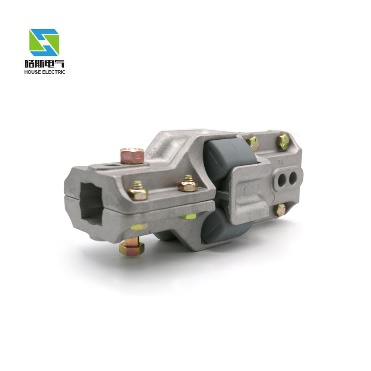
Core Coupler Selection Criteria for High-Throughput Irrigation Lines
Why Standard Couplers Fail Under Continuous Cycle-Time Pressure
The standard couplers we see on those high volume irrigation assembly lines tend to break down pretty often because nobody really addresses the fatigue buildup from all those fast connections happening minute after minute. When the cycle time gets down to under 30 seconds like it does in most precision farming setups these days, the old school designs just can't keep up. The sealing surfaces get worn out faster than normal and those locking mechanisms start failing too. According to some field research, around 78 percent of early failures actually come from gradual material fatigue at certain stress points rather than any kind of sudden overload situation. Looking deeper into what happens during continuous operation reveals three main problems that manufacturers need to worry about. First off, those polymer seals degrade about 40% quicker when they're subjected to constant temperature changes. Metal springs also lose their tension after going through roughly 50 thousand connection cycles. And finally, the threads where components engage wear past acceptable ISO 14125 standards over time. All this leads to expensive unexpected downtime costing farms about 15 hours each month per assembly line, plus irrigation system leaks that waste somewhere around 200 thousand gallons of water every year on average per farm. For places dealing with such high cycle demands, there's a real need for better couplers made with fatigue resistant metals, stronger polymer shapes, and proper testing throughout their entire lifespan before deployment.
Balancing Service Factor, Duty Cycle, and ISO 14692 Validation Requirements
Getting good results from couplers means finding the right balance between several key factors: service factor (SF), how often they're used (duty cycle), and meeting ISO 14692 standards. The service factor is basically a number that accounts for unexpected shocks in the system. For irrigation setups where pumps surge or valves suddenly open/close, this number needs to be over 1.5 to handle those impacts properly. When systems run more than 70% of the time, material choice becomes really important because heat builds up. HDPE couplers start losing about a third of their strength when temps hit around 140 degrees Fahrenheit in the surrounding air. Another big deal is passing ISO 14692 testing. This independent check confirms whether materials can stand up to chemicals commonly found in fertilizers and pesticides without cracking under pressure over time. Field experience shows these standards matter a lot in keeping systems running smoothly long term.
| Parameter | Low-Risk Threshold | High-Throughput Requirement |
|---|---|---|
| Service Factor (SF) | 1.2 | ≥1.8 |
| Duty Cycle | ≤50% | ≥85% |
| Temperature Tolerance | 120°F | 180°F |
| Chemical Exposure | pH 6–8 | pH 3–11 |
Over-prioritizing one factor increases failure risk—a coupler with 2.0 SF but inadequate duty cycle rating fails three times faster in continuous operation. Validated ISO 14692 couplers demonstrate 92% reliability at 100,000 cycles in accelerated agrochemical exposure tests.
Misalignment Tolerance: A Critical Coupler Performance Metric
Quantifying Angular, Parallel, and Axial Compensation in Dynamic Conveyor Environments
Irrigation coupler assemblies today need to cope with three dimensional misalignments because conveyor systems work under repeating loads and experience thermal expansion changes. When shafts meet at angles that aren't parallel, we get angular misalignment usually between 1 to 3 degrees. Parallel offset happens when shafts are running alongside each other but not centered properly. Axial displacement typically ranges from 0.5 to 2 mm and helps compensate for shaft lengthening caused by temperature changes or sudden pressure increases. For dynamic irrigation systems, rigid PVC pipes can expand about 3.2 mm per meter when there's a 30 degree Celsius temperature difference according to ASTM D1784 standards. This means couplers need to handle at least 1.5 mm of axial movement and around 2 degrees of angular shift to avoid joint fatigue over time. Since these systems often run non stop for weeks on end, manufacturers look for thermoplastic materials that remember their shape after thousands of stress cycles without losing structural integrity or developing permanent deformations.
The 'Zero-Misalignment' Myth: How Over-Rigid Coupler Specs Increase Failure Risk (ASAE EP470.3 Insights)
Trying to get rid of every last bit of misalignment using super precise couplings actually tends to cause problems down the line in most industrial applications. According to ASAE EP470.3 standards, those fancy couplers designed for under 0.1 degree angular tolerance end up failing about two thirds more frequently in irrigation systems compared to regular flexible ones that can handle between 1.5 to 2 degrees of offset. What happens here is pretty straightforward really. These ultra rigid connections just pass along all that vibration straight into the bearings and seals instead of soaking it up properly. Maintenance teams report seeing their repair bills jump around 45 percent higher when these strict tolerances are enforced, per the latest 2024 Irrigation Systems Report. Industry experts recommend building in some wiggle room during installation. Align equipment within roughly 0.7 mils per inch but leave space for about 1.5 degrees of angular movement in the coupling itself. This approach cuts down on shaft stress by nearly a third and keeps parts running longer overall.
Torque, Pressure, and Hydraulic Transient Compatibility
Sizing Coupler Torque Capacity Against Pulsed-Delivery System Transients
The sudden hydraulic changes in irrigation systems that deliver water in pulses create torque spikes far beyond normal operating levels, sometimes reaching three to five times higher. These pressure jumps happen when valves open quickly or pumps start and stop abruptly, which means standard couplings won't cut it. They need special design for those extreme moments of stress rather than just regular operation. When couplers are too small for the job, tiny cracks begin forming every time there's one of these pressure surges. Over time this leads to problems like early separation between drive shafts, faster wearing down of gears, and eventually complete system failure once the twisting force goes past what materials can handle.
Looking at field data from automated pivot systems shows something interesting about couplers failing pretty quickly. Around two thirds of them break down within just six months if their torque capacity has been calculated only for continuous operation. When it comes to handling transient forces, we need dynamic torque ratings that take into account things like how fluids interact with structures, how waves reflect back through the system, and those energy absorbing properties of materials over time. For best results, go with designs that are stiff against twisting but can still flex a bit sideways. These kinds of setups help absorb sudden shocks while keeping everything aligned properly, which matters a lot on those fast moving drip emitter production lines where even small misalignments cause big problems later on.
Material Compatibility and Thermal Behavior in Mixed-Pipe Assembly Lines
Mitigating HDPE–Stainless Steel Thermal Expansion Mismatch in Coupler Joints
When it comes to irrigation systems, the different ways HDPE and stainless steel expand with heat creates serious problems at the coupler joints. High density polyethylene expands about 150 to 200 times 10 to the minus sixth per degree Celsius during normal operation. That's roughly ten times what stainless steel does at around 17 times 10 to the minus sixth per degree. The difference in expansion rates leads to stress buildup in those rigid connections that can reach over 8 megapascals. Over time this causes the joints to wear out faster and increases chances of leaks developing. If left unchecked, these issues will eventually lead to system failures down the line.
- Flexible coupler designs (bellows/slip-joint styles) absorb axial/angular movement while maintaining seal integrity
- Thermal barriers (ceramic-filled composites) insulate joints to minimize ΔT fluctuations
- Hybrid gaskets with elastomeric cores bridge expansion gaps between materials
Engineers must prioritize these adaptations to prevent joint separation and reduce maintenance costs in high-throughput environments where thermal cycling exceeds 35°C daily. Neglecting expansion differentials can shorten coupler service life by 40% in mixed-material pipelines.
FAQ
Why do standard couplers fail under continuous cycle-time pressure?
Standard couplers often fail due to fatigue buildup from fast and constant connections, causing them to wear out quickly under high precision farming cycle times.
What is the ideal service factor for high-precision irrigation systems?
The ideal service factor should be over 1.5 to effectively handle unexpected shocks and impacts common in such systems.
How does misalignment affect coupler performance?
Misalignment can lead to joint fatigue, so couplers must adapt to angular, parallel, and axial displacements to ensure longevity and reliability in dynamic environments.
What issues arise from HDPE–stainless steel thermal expansion mismatch?
The different expansion rates of HDPE and stainless steel can cause stress buildup at coupler joints, leading to faster wear out and potential leaks.