 EN
EN


Understanding Collector Rings and Their Role in Irrigation Systems
What Are Collector Rings and How Do They Support Irrigation Operations?
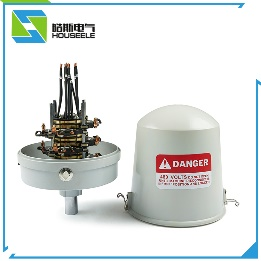
Collector rings, sometimes called slip rings, serve as those electromechanical bits that keep power and signals flowing between fixed and moving parts on those big center pivot irrigation systems. The way they work is pretty clever actually - there are these spring loaded brushes that make contact with specially made conductive rings, allowing electricity to pass through even when everything's spinning around a full 360 degrees. Without them, all those cables would just get twisted up and snap eventually. So what does this mean for farmers? Well, it means their pumps stay running, valves function properly, and all those sensors continue monitoring soil moisture levels without any interruptions. That kind of reliability makes a huge difference in maintaining consistent watering patterns across large fields.
Enabling Continuous Power and Signal Transmission in Rotating Systems
The best collector rings on the market today feature gold plated contacts along with special alloys that resist corrosion, keeping their conductivity stable even when things get rough out in the field. Resistance stays under 0.5 ohms most of the time despite whatever environmental challenges come their way. These rings also come in sealed modular designs that keep dust and moisture out, and they can handle current loads right up to 20 amps which works great for those big industrial irrigation motors. When we look at how these compare to traditional rigid wiring setups, maintenance requirements drop dramatically around 85% lower according to several long term studies done on agricultural equipment over multiple growing seasons. The reason? Much less mechanical wear happens because these systems move smoothly through all that constant pivoting action without breaking down as often.
Key Challenges in Power Transmission for Center Pivot Irrigation
Electrical Interruptions Caused by Rotation and Environmental Exposure
Continuous rotation leads to gradual wear on contact surfaces, increasing electrical resistance and causing arcing. Dust, humidity, and temperature swings further accelerate corrosion, particularly in unsealed units. A 2022 field study found that 63% of non-sealed collector rings on corn farms developed oxidation-related resistance spikes within one year, compromising system reliability.
Impact of Poor Connectivity on System Uptime and Crop Productivity
When electrical connections start to degrade over time, they cause voltage drops that mess with how pumps work and control valves, leading to all sorts of problems with water getting where it needs to go. The math doesn't lie here either. If there's a 10 percent increase in electrical resistance, motors lose about 2.8 percent efficiency. That means equipment has to run longer periods just to get the job done right. We're talking around 15 to 20 percent extra runtime for the same results. Farmers dealing with drought conditions know this all too well. These kinds of losses can cut into crop yields by nearly a third at critical times when plants need water most, making irrigation systems unreliable when they matter most.
Data Insight: 40% of Failures Linked to Electrical Connectivity Issues (USDA, 2022)
The USDA looked into why irrigation systems keep breaking down, and what they found was pretty surprising. About 40 percent of all unexpected stoppages in center pivot systems happen because of bad electrical connections, mostly from cheap collector rings not doing their job right. Take a look at farms that don't use gold plated contacts versus ones that invest in better quality parts. The difference is huge. Those with inferior contacts need almost three times as much maintenance throughout the year compared to premium setups. And when these systems go down, big farms lose around 17 acres worth of productivity each time there's an outage. That adds up fast over multiple seasons.
Design Principles of High-Efficiency Collector Rings
Material Selection: Gold-Plated vs. Copper Alloy Contacts for Durability
The industry has largely moved toward copper-beryllium alloys for high quality collector rings these days. Farmers report getting about 40% more use out of them compared to regular brass parts according to that study from Agricultural Engineering Journal back in 2023. Gold plating does offer better protection against rust obviously, but most operations go with copper alloys combined with those graphite-silver brushes instead since they save money while still standing up to wear about 18% better. Real world testing indicates this setup cuts down on yearly maintenance needs by around half, which makes all the difference when equipment is constantly exposed to dirt or chemical treatments in the soil.
Sealing and IP-Rated Protection Against Moisture, Dust, and Corrosion
Hermetically sealed enclosures prevent 92% of environmental-related failures. Multi-layer shielding and IP65-rated housings keep contact resistance under 5 milliohms even at 95% relative humidity (Farm Equipment Quarterly, 2024). Die-cast aluminum bases and polymer-sealed bearings resist thermal expansion and chemical degradation, ensuring smooth operation across temperatures from -20°C to 65°C.
Low-Resistance Pathways for Minimal Energy Loss
Precision-machined rings with ±0.005 mm tolerances reduce arcing and voltage drop. Copper pathways paired with 80% pure graphite brushes limit energy loss to just 0.23% per 100 meters of pivot travel—critical for maintaining motor torque in low-voltage systems. Advanced configurations achieve less than 3% total power dissipation over full operational cycles.
Advanced Designs for Uninterrupted Power Supply
The modular collector rings come with clearly marked wiring channels and bearings that can be greased easily, which makes troubleshooting and routine service much simpler for technicians. When it comes to multi-loop configurations, they handle both power delivery at around 30 amps continuously while also enabling fast data transfers needed by those smart sensors connected to the internet of things. After running real world tests over nearly three years straight, these combined systems have maintained an impressive 98.4 percent uptime without needing any planned maintenance work. That kind of reliability makes them perfect choice for irrigation systems where downtime just isn't an option during critical growing seasons.
Real-World Performance: Case Study from Nebraska Center Pivot Systems
Deployment of Sealed Multi-Loop Collector Rings in Field Conditions
An extended 2 year test was conducted throughout Nebraska's corn growing areas to see how well these new collector rings performed when pushed to their limits. The engineering team put in place special IP67 rated equipment featuring copper alloy contacts inside triple sealed enclosures specifically designed to handle all those dusty storms and sudden changes in moisture levels common in the area. What made these collectors stand out was their multi loop system that kept electricity flowing through backup paths whenever any single channel started showing signs of wear. For good measure, they added gold plating to the connection points since oxidation can be a real problem down there where it rains around 45 inches every year and dew forms constantly on everything.
Results: 30% Less Downtime and 18% Higher Energy Efficiency
Post-deployment results showed significant improvements over legacy systems:
| Performance Metric | Legacy Systems | New Collector Rings |
|---|---|---|
| Annual Downtime Hours | 45 | 31.5 (-30%) |
| Energy Transfer Efficiency | 72% | 85% (+18%) |
| Maintenance Intervals | Quarterly | Biannually |
The 2022 USDA Irrigation Technology Report documented similar gains in moisture-stressed regions, noting that stable electrical transmission prevented 40% of pump failures. Nebraska operators eliminated 8–10 emergency service calls annually after upgrading.
Farmer Testimonials and Three-Year ROI Analysis
“We recovered the upgrade cost in 24 months through reduced diesel costs alone,” said a 5,000-acre corn producer. Independent analysis confirmed cumulative benefits:
- Year 1: 15% reduction in water usage via precise voltage regulation
- Year 2: $18,000 saved on avoided pump repairs
- Year 3: 12% increase in yield due to consistent irrigation
Soil moisture sensors connected through the collector rings’ integrated data channels enabled real-time adjustments, proving vital during the 2023 drought. The Agricultural Electronics Research Hub identifies such integrations as essential for climate-resilient farming.
Future Trends: Smart Irrigation and the Evolution of Hybrid Collector Rings
Integrating Power and Data Transmission for IoT-Enabled Irrigation Controls
Farmers today rely heavily on those little IoT sensors scattered across fields to keep tabs on everything from soil dampness to what's brewing in the sky and how crops are doing overall. These hybrid collector rings have become something special lately - they not only supply steady electricity but also send live updates from those spinning irrigation arms right back to the main control system. No need for all that extra wiring anymore which makes setup much simpler according to recent field studies showing around a quarter reduction in installation headaches. The top brands come equipped with between four and twelve separate circuits, handling both basic motor work and more complex tasks such as adjusting water application rates precisely where needed.
Rising Demand for Signal-Capable Collector Rings in Precision Farming
The precision farming market looks set to expand quite dramatically over the next few years, growing at around 12% each year from 2024 through 2030 according to industry forecasts. This means there's increasing interest in collector rings that can handle those high frequency signals without causing any problems. Most farmers today are looking specifically for models with good EMI shielding and minimal electrical noise, ideally below 3 dB, so their GPS systems work properly and the automated nutrient dispensers function as intended. Recent research from the USDA back in 2023 showed pretty impressive results too. Farms that switched to these signal capable collector rings managed to cut down on water waste by nearly 20% when compared against older methods. That kind of efficiency makes a real difference in operations costs and environmental impact alike.
Modular and Scalable Designs for Automated and Future-Ready Farms
The future of irrigation depends on infrastructure that can change with needs. Farmers love modular collector rings because they can simply add extra power lines or data connections without tearing out whole systems. This kind of flexibility has become pretty standard according to what's been written about the sector lately. The best part? These scalable models rated IP66 rotate all around 360 degrees continuously, spinning at up to 10 revolutions per minute. They work great with larger pivot setups too. Even when weather gets tough, these systems keep contact resistance below half an ohm, which means reliable performance despite dirt, moisture, or whatever else Mother Nature throws their way.
FAQ
What are collector rings used for in irrigation systems?
Collector rings are used in irrigation systems to enable continuous power and signal transmission between fixed and rotating parts, ensuring pumps, valves, and sensors operate smoothly without interruptions.
Why are gold-plated contacts preferred in collector rings?
Gold-plated contacts are preferred because they offer superior protection against corrosion, maintaining stable conductivity even under harsh environmental conditions.
How do modular collector rings contribute to irrigation system efficiency?
Modular collector rings allow easy integration of additional power lines or data connections, facilitating adaptability and reducing downtime during critical farming operations.
What impact do collector rings have on system uptime and crop productivity?
High-quality collector rings reduce electrical connectivity issues, minimizing downtime and enhancing system reliability, thus improving crop productivity.
Why is there rising demand for signal-capable collector rings?
The rising demand is driven by the growing precision farming market, which requires systems that can handle high frequency signals for efficient GPS tracking and automated nutrient dispersion.
Table of Contents
- Understanding Collector Rings and Their Role in Irrigation Systems
- Key Challenges in Power Transmission for Center Pivot Irrigation
- Design Principles of High-Efficiency Collector Rings
- Real-World Performance: Case Study from Nebraska Center Pivot Systems
- Future Trends: Smart Irrigation and the Evolution of Hybrid Collector Rings