 EN
EN


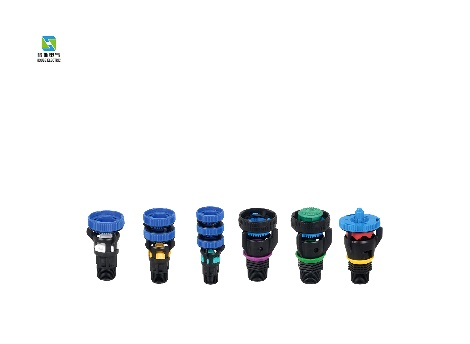
Core Sprinkler Types and Their Impact on Agricultural Water Efficiency
Center Pivot, Linear Move, and Solid-Set Systems: Matching Scale, Topography, and Crop Rotation Needs
Sprinkler systems today come in all sorts of sizes and designs, each one better for certain kinds of fields and farming needs. Take center pivots for instance these big circular systems that spin around a central tower work great on flat land between about 50 and 500 acres. They cut down on water waste pretty substantially compared to old fashioned flood methods, probably saving around 30% because they spread water evenly at lower pressure levels. Then there are linear move systems that run back and forth across rectangular fields using parallel tracks. These handle different row spacings and gentle hills pretty well too, keeping water distribution consistent over 85% of the area most of the time. For those tricky spots with odd shapes or complicated crop rotations, solid set systems make sense. These permanent installations let farmers water specific zones simultaneously even when different parts need varying amounts of moisture. Plus their ability to adjust elevation helps reduce runoff issues on slopes as steep as 15%.
Nozzle Technology Deep Dive: Impact, Rotational, and Gear-Driven Sprinklers and Their Effect on CU, Droplet Size, and Wind Drift
The way nozzles are designed plays a big role in how water gets distributed, mainly because they control things like droplet size, energy levels, and where those drops actually go. Impact sprinklers tend to break water down into droplets around 1 to 3 millimeters across, which works pretty well for medium textured soils since these soils let water soak in at a reasonable rate without forming crusts on top. Rotating or rotator nozzles create much finer mist when operating at lower pressures, often hitting Uniformity Coefficient scores over 90 percent when there's not much wind around. However, when winds pick up to about 5 meters per second, these same nozzles can lose anywhere from 15 to 25 percent of their water through drift. Gear driven nozzles have become something of a gold standard nowadays. These models feature tiny adjustable openings that keep droplet sizes between 2 and 4 mm fairly consistently, even when pressure varies. They manage to maintain CU ratings above 88% across different wind conditions and cut down on evaporation losses by approximately 18% compared to older nozzle designs. Picking the correct nozzle type really comes down to finding the sweet spot between protecting the soil, getting good water absorption, and minimizing water lost to the atmosphere.
Measuring and Achieving High Water Distribution Uniformity with Sprinklers
Uniformity Coefficient (CU) and Distribution Uniformity (DU): Practical Benchmarks for Sprinkler Performance
Looking at uniformity metrics isn't just about hitting numbers on a spreadsheet but understanding how well irrigation actually works in practice. The Uniformity Coefficient or CU tells us how consistently water gets applied across fields. When this number hits above 85%, we know the system is running efficiently most of the time. Then there's Distribution Uniformity (DU), which basically compares how much water reaches the driest quarter of the field versus what should be average coverage. This metric shows where parts might be getting too little moisture. According to research from the University of Georgia in 2023, fields with DU scores over 75% waste around 18 to 22 percent less water than those with poor distribution. To keep these good results going, farmers need to watch their nozzle pressures stay between about 10 and 50 psi for rotator sprinklers, arrange equipment considering wind patterns, and regularly check for clogs that can throw off everything else.
| Metric | Optimal Threshold | Impact on Efficiency |
|---|---|---|
| CU | > 85% | Prevents over/under-watering |
| DU | > 75% | Reduces water waste by ~20% |
| Pressure CV* | < 15% | Ensures droplet uniformity |
| *Coefficient of Variation |
Optimizing Precipitation Rate (3—5 mm/h) to Minimize Runoff, Enhance Infiltration, and Reduce Evaporation Loss
The speed at which water lands on soil makes a big difference in how it behaves. If rain falls too quickly, we get runoff problems. But if it comes down too slowly, more water just evaporates before it can soak in. Most soils handle around 3 to 5 millimeters per hour pretty well. When precipitation goes above 6 mm/hour, especially on hills steeper than 5 percent, runoff jumps by almost half according to studies from Alabama Cooperative Extension back in 2023. On the flip side, anything below 3 mm/hour means about a quarter more water disappears into thin air in dry regions. Smart irrigation systems tackle these challenges using special nozzles that adjust pressure based on what's happening with the ground underneath them. They also schedule watering times based on actual conditions they measure right there in the field. Plus, these systems spray water at angles that keep it from blowing away so much. All these tricks work together to make sure about 95 out of every 100 gallons actually get used where needed. Farmers save money too since they spend roughly thirty dollars less per acre each year because their pumps don't have to run as hard and fewer nutrients wash away with excess water.
Critical Components That Maximize Sprinkler System Efficiency
Pressure Regulators, Precision Nozzles, and Flow Control Valves: Enabling Consistent Application Under Variable Conditions
The heart of good hydraulic precision lies in three main parts working together: pressure regulators, precision nozzles, and flow control valves. Pressure regulators keep things stable when dealing with elevation changes or inconsistent pump performance, which helps prevent problems like misting, overspray, and those annoying uneven droplets everyone hates. Precision nozzles have specially designed flow paths that produce droplets around 1.5 to 3.5 mm in size. These smaller droplets stay put better against the wind, don't evaporate as quickly, and actually soak into the soil instead of just sitting on top. Flow control valves let growers make fine adjustments to different areas of their fields something absolutely essential when crops need varying amounts of water or when trying to reduce runoff on tough soils. When these components work as intended, they maintain distribution uniformity above 85% even when pressure fluctuates or there are changes in slope. Take pressure compensating nozzles combined with proper regulators for example they can cut flow variations down to less than 10% across hilly ground. Farmers who implement this system typically see water savings between 15% and 30% compared to older setups without regulation. And remember, regular maintenance matters a lot too clean filters and unclogged nozzles are what keeps the whole system performing at its best over time.
Smart Management Strategies to Sustain Sprinkler Efficiency Long-Term
Keeping sprinkler systems performing well requires regular attention backed by good data. Modern smart controllers now work with local weather predictions and actual soil moisture readings to change watering schedules automatically. These adjustments cut down on wasted water during rainstorms by around 30% and help plants stay hydrated when temperatures spike. Regular maintenance matters just as much though. Checking nozzles, filters, and pressure settings every three months catches problems before they get bad. Clogged emitters can really hurt crop uniformity, sometimes reducing it by anywhere from 15% to 40%. Pressure fluctuations mess with how water spreads too. Adjusting sprinkler arcs and spray patterns seasonally makes sure water hits where it's needed most, which cuts down on what gets blown away by wind. Pair all this with ongoing flow checks and we start building real efficiency baselines. This helps spot leaks quickly, predict potential issues, and maintain good water pressure throughout the growing season. Farmers who adopt this comprehensive strategy typically see their yearly water and electricity bills drop between 12% and 18%, all while keeping crop yields stable.
FAQ
Q: What are the main types of sprinkler systems discussed?
A: The article discusses three main types of sprinkler systems: center pivot, linear move, and solid-set systems.
Q: How do nozzle designs impact water distribution?
A: Nozzle designs impact water distribution by controlling droplet size, energy levels, and distribution. Different types of nozzles like impact, rotational, and gear-driven sprinklers have varied effects on water efficiency and distribution uniformity.
Q: What is Distribution Uniformity (DU) and why is it important?
A: DU compares how much water reaches the driest quarter of a field to the average coverage. High DU scores indicate efficient water use, reducing water waste and assuring crops get adequate water.
Q: How can smart irrigation systems improve efficiency?
A: Smart irrigation systems improve efficiency by using special nozzles that adjust pressure based on soil conditions, scheduling watering times based on real-time field data, and reducing evaporation losses and water waste.